Posted on 11/4/2026 by Fudar Offical | Views: 125
Composite electrical contact tips are used in a wide range of equipment, including low- and high-voltage switches, instruments, electronic devices and communications equipment. Silver tin oxide (AgSnO₂) contact tips have a working layer that forms the contact surface and a silver backing layer used to attach the tip to an assembly. Uniform silver coverage and a sound bond between these layers are important for both manufacturing and assembly.
Fudar has developed an extrusion process that forms the silver backing from a pure silver coating applied to the inner wall of the container. This approach aims to produce a more uniform silver layer and a less porous interface while supporting subsequent rolling.
AgSnO₂ is less ductile than pure silver, so stresses at the edges during conventional hot-roll cladding can cause cracking.
To address this problem, the billet—a compacted block of contact material—can be wrapped in a silver sleeve before extrusion. After extrusion, the silver-covered edges of the sheet deform more readily during subsequent rolling, reducing cracking and improving yield.
The sleeve and billet are not effectively bonded before extrusion. Differences in how they respond to heat and pressure can lead to two quality problems:
To address these issues, Fudar applies a pure silver coating to the inner wall of the extrusion container instead of fitting a separate sleeve around the billet. This avoids sleeve distortion during preheating.
The process follows four main stages:
The silver-covered edges deform more evenly during rolling, reducing the risk of cracking.

Process Flow
The metallographic images below compare the interfaces between the AgSnO₂ material and its silver backing in samples produced using the two processes. In the sample produced using Fudar's process, the two materials appear well bonded, with a continuous interface and no visible pores in the section shown. The conventional sample shows interfacial porosity, visible as a dark line along the boundary.
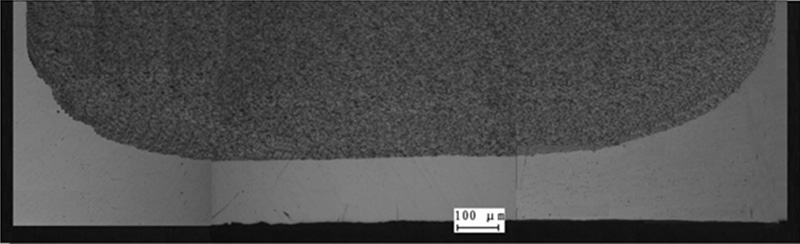
Flame-sprayed coating process
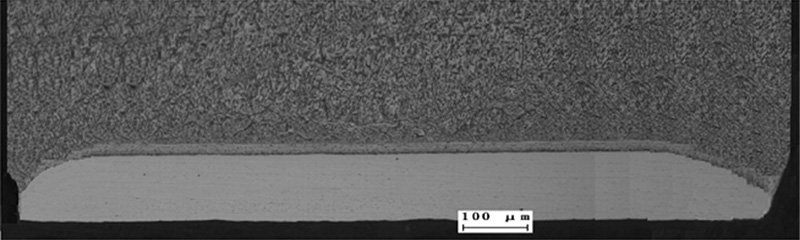
Conventional silver sleeve process
The images provide qualitative evidence of improved interface continuity. Mechanical testing would be needed to quantify the difference in bond strength.
Bond strength in AgSnO₂ contact tips affects both manufacturing yield and the quality of the finished product. By improving how the silver layer is formed, Fudar's process offers a practical route to more uniform silver coverage, fewer interfacial pores and more consistent bond strength.
Fudar will continue to apply advances in contact material processing to industrial production. To discuss AgSnO₂ contact materials and your application requirements, please feel free to contact our team.
Please fill out the form below. Our sales team is ready to assist you with any questions or inquiries.

