Posted on 9/3/2026 by Fudar Offical | Views: 250
Sealed relays are widely used in aircraft, satellites, launch vehicles, and other aerospace systems, where they may be exposed to temperature extremes, radiation, vibration, and other demanding conditions. In such applications, reliable switching is essential.
Electrical contacts are central to relay operation, making and breaking the external circuit. During repeated switching, arcing, localized heating, and mechanical wear can erode the contact surface, increase contact resistance, cause material transfer, or even weld the contacts together. These challenges become more difficult to manage as electrical components become smaller and switching loads increase.
Contact materials for sealed relays must therefore combine electrical conductivity and mechanical strength with resistance to arc erosion, contact welding, and mechanical wear.
To investigate this balance, Fudar Alloy compared conventional AgCdO12 with a modified formulation to assess how differences in composition and microstructure affected resistivity, tensile strength, material loss, welding behavior, and electrical life.
Both materials were produced by internal oxidation. Their compositions are shown in Table 1.
Table 1. Compositions of the conventional and modified AgCdO12 materials
| Material | Ag (wt%) | CdO (wt%) | Additives (wt%) |
| Conventional AgCdO12 | 88 | 12 | None |
| Modified AgCdO12 | 88 | 10.5 | 1.5 |
The modified formulation retained the same silver content, replacing 1.5 wt% CdO with selected additives. Both materials were processed into silver-alloy wire and then formed into contact rivets for testing.
The evaluation included:
The simulated switching test ran for 10,000 operations under a 250 VAC, 20 A inductive load. It used a 50% duty cycle, a nominal contact force of 100 gf, and a 2 mm contact gap.
For relay-level testing, the contact rivets were assembled into sealed relays and operated at room temperature under a 250 VAC, 10 A resistive load. The test used a 1 s on/1 s off cycle and a target of 100,000 operations.
Figures 1 and 2 show a clear difference in microstructure: the modified AgCdO12 contains coarser oxide particles than the conventional material.
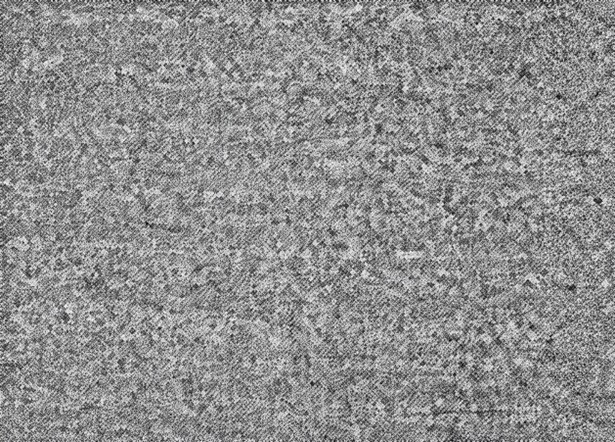
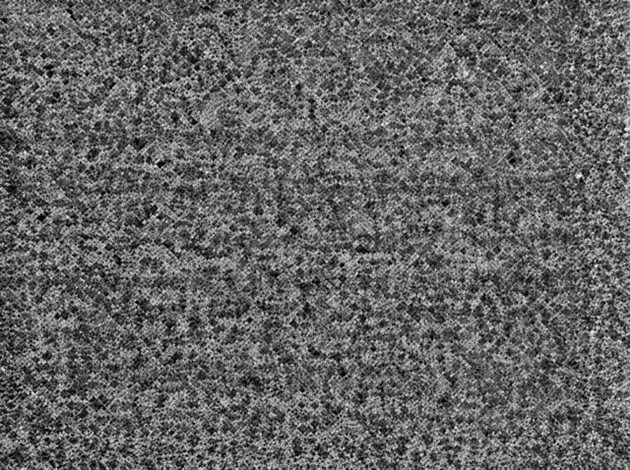
During internal oxidation, the additives react with oxygen more slowly. This limits the formation of new oxide particles, allowing those that do form to grow larger.
Mechanical and electrical testing showed that the modified AgCdO12 had higher tensile strength and lower resistivity than the conventional material.
The additives help silver and CdO bond more effectively during sintering, producing a denser material with fewer internal pores. This stronger internal structure helps explain the higher tensile strength.
In a metal-matrix composite, electrons can be scattered at the interfaces between the silver matrix and oxide particles. The coarser particles may reduce this scattering, allowing current to flow more easily through the silver matrix.
In practical terms, lower resistivity helps limit resistive heating, while stronger internal bonding makes the contact less susceptible to mechanical damage and arc erosion during switching.
Repeated arcing can melt or vaporize material at the contact surface, leading to material transfer, cracking, and gradual material loss.
Figure 3 shows an average mass loss of 11.3 mg for conventional AgCdO12 and 8.9 mg for the modified material. Under the same test conditions, this represents a reduction of approximately 21%.
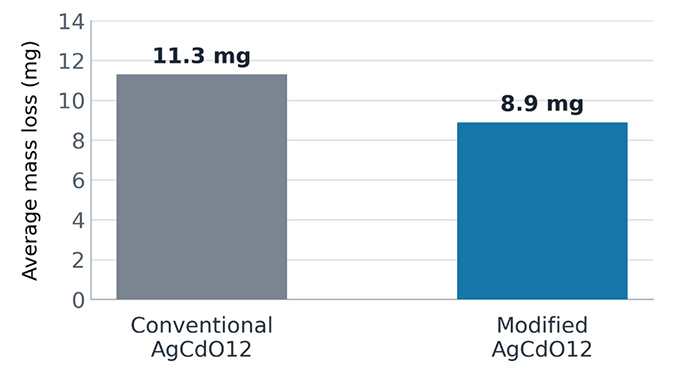
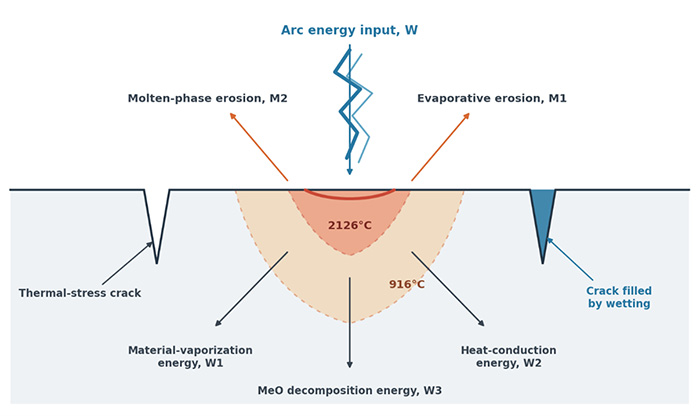
Figure 4 illustrates arc erosion in a silver-metal oxide (AgMeO) contact. When the melt pool cools after the arc is extinguished, differences in thermal expansion among the phases generate internal stress. This can initiate or extend surface cracks, loosen the near-surface structure, and increase material loss.
Against this background, three features of the modified material may help explain its lower mass loss:
Together, these mechanisms help reduce material loss during repeated arcing.
For conventional AgCdO12, the welding force increased from 14 to 69 gf during cycling. If this exceeds the force available to open the relay, the contacts may fail to open reliably. For the modified material, the welding force ranged from 3 to 12 gf and generally remained below 10 gf.
At high temperatures, CdO in the conventional material can decompose and form a higher-resistance AgCd alloy layer. As this layer builds up, it increases localized heating and the risk of contact welding.
In the modified material, lower resistivity helps reduce heating, while a brittle oxide layer formed by the additives can break during contact closure and expose fresh material. Together, these effects help keep the welding force lower and more stable.
Sealed relays fitted with the modified AgCdO12 contact rivets met the 100,000-operation electrical-life target under the stated test conditions.
The results show that composition alone does not determine AgCdO performance. Processing also affects oxide-particle size, internal bonding, the presence of internal pores, and how molten silver spreads through the material.
Overall, the modified material had coarser oxide particles, higher tensile strength, lower resistivity, approximately 21% lower average mass loss, and a more stable welding force. Sealed relays fitted with the modified contacts also met the 100,000-operation electrical-life target under the stated conditions.
These findings are specific to the materials and test conditions evaluated here. Actual performance also depends on relay design, switching load, operating environment, and attachment quality. Application-specific testing therefore remains essential.
Fudar Alloy supports sealed relay applications with material selection, contact design, manufacturing, and validation. Contact our team to discuss your requirements
Please fill out the form below. Our sales team is ready to assist you with any questions or inquiries.