Posted on 12/10/2024 by Fudar Offical | Views: 1280
With the advancement of science and technology, the demand for electrical contact materials has grown steadily. These materials are now widely used in relays, circuit breakers, and various other types of electrical equipment.
In recent years, the enforcement of environmental protection policies has accelerated the development of new contact materials. Among them, AgZnO has gradually emerged as a promising alternative to traditional cadmium-containing materials. This is because AgZnO is not only environmentally friendly, but also maintains excellent flame resistance and electrical conductivity under high current conditions.
Researchers are focused on how to improve the performance of AgZnO. They want it to work well under tougher conditions.
The mechanical powder mixing method is a commonly used technique for preparing AgZnO. It is widely adopted due to its short production cycle and relatively simple operation.
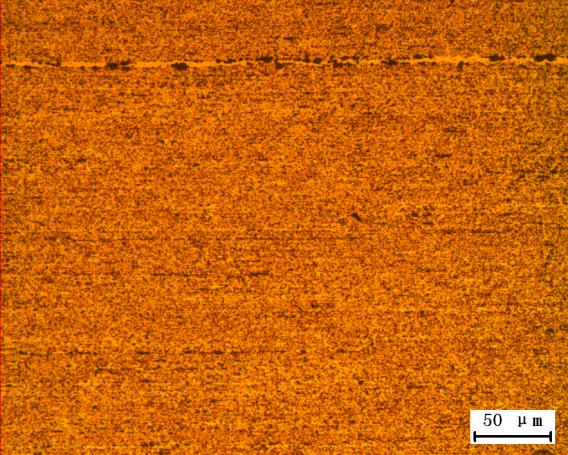
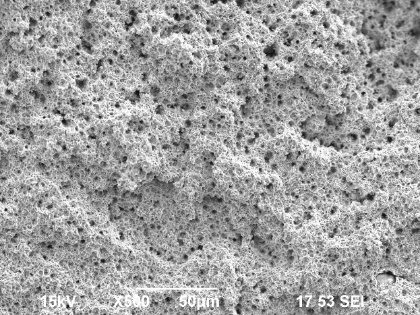
However, this method has a significant drawback. The ZnO powder is extremely fine and tends to agglomerate. As a result, it cannot be uniformly dispersed within the silver matrix. This unevenness causes changes in material properties. These changes affect the stability and lifespan of the contacts.
Ultrasonic dispersion uniformly disperses ZnO particles in a silver matrix through a physical phenomenon known as the ‘cavitation effect’. Specifically, when ultrasonic vibrations are transmitted through a liquid, tiny bubbles form within the liquid.
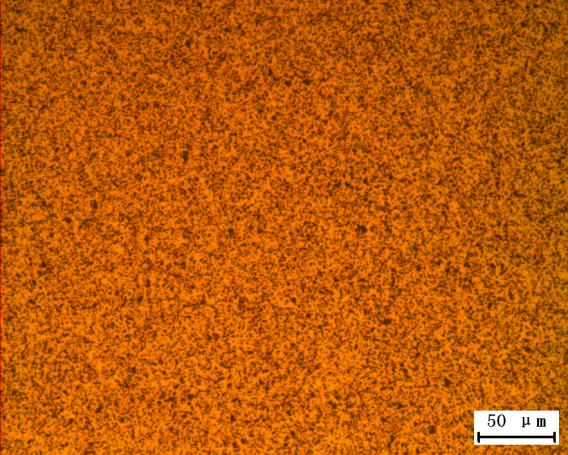
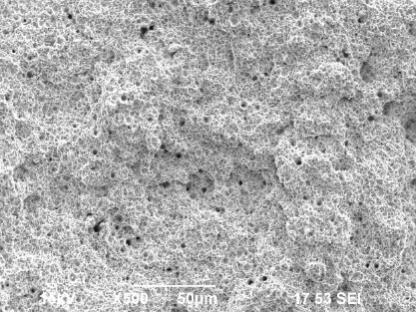
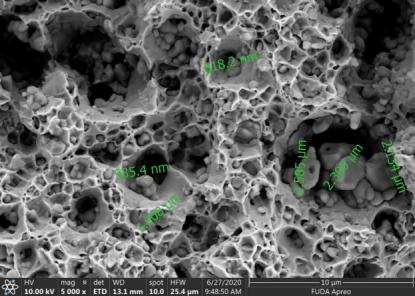
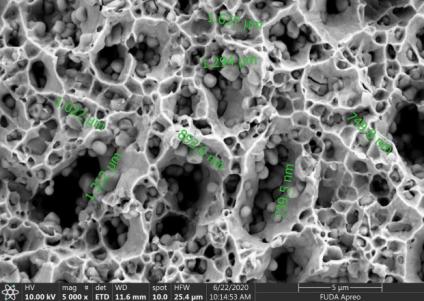
When these bubbles burst, tiny fluid shock waves are generated. These shock waves disperse the larger ZnO particles into smaller ones, effectively preventing the agglomeration of ZnO. This process improvement results in a more uniform and stable internal structure of the AgZnO contact material. As a result, the comprehensive performance of the material is significantly enhanced.
 |
 |
 |
 |
| a—Mechanical Powder Mixing 500x |
b—Ultrasonic Dispersion 500x |
 |
 |
| c—Mechanical Powder Mixing 5000x |
d—Ultrasonic Dispersion 5000x |
With the increasing demand for environmentally friendly and high-performance electrical contact materials, ultrasonic dispersion has a promising future. The advantages of this process are twofold. First, it improves the material performance. Second, it provides a low-cost, high-quality solution for producing electrical contact materials.
In the future, high-dispersion AgZnO contact materials, prepared by ultrasonic dispersion, will play a key role in improving the performance of relays and circuit breakers. They will also contribute to the environmental protection of such equipment. For more information about the AgZnO and related solutions or products, please visit https://www.fudarworld.com/ or feel free to contact us.
Please fill out the form below. Our sales team is ready to assist you with any questions or inquiries.