Posted on 12/10/2024 by Fudar Offical | Views: 1408
Magnetic latching relays are widely used in smart meters, synchronised switches, smart homes, and other types of automation equipment. Their primary function is to switch between energised and de-energised states using pulse signals. However, under high currents, the contacts of these relays are prone to bonding problems, which affect their service life. Therefore, research and development of electrical contact materials with better performance has become a priority in the development of magnetically latching relays.
Two types of AgSnO₂ materials were made using the ‘pre-oxidation method.’ One is a regular silver tin oxide material. The other has extra anti-burning elements added.
A series of tests were carried out to compare the two materials in terms of hardness, tensile strength, and resistivity. Additionally, their durability under high-load conditions was further analyzed.
| Categories | Tensile Strength MPa |
Electrical Resistivity μΩ.cm |
Density g/cm3 |
Hardness HV0.3 |
||
| Traditional Material | 300 | 2.2 | 9.77 | 85.6 | 86.7 | 86.2 |
| Improved Material | 315 | 2.24 | 9.77 | 95.2 | 98.4 | 97.3 |
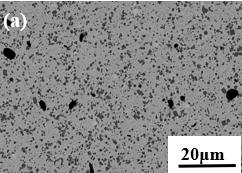 |
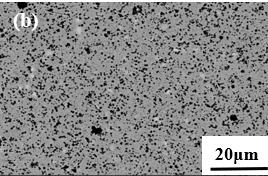 |
| Traditional Material |
Improved Material |
In tests, the electric life of the new material is much better. The new material lasts up to 110,000 cycles. This is twice as long as the old material.
The improved material lasts for an average of 10,000 uses in the relay test. In contrast, the traditional material lasts only about 3,000 uses.
Further analysis showed that the improved material worked better in arc ignition time and welding force tests. It also reduced contact burnout, which greatly extended the relay's overall life.Please fill out the form below. Our sales team is ready to assist you with any questions or inquiries.