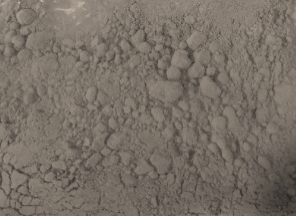
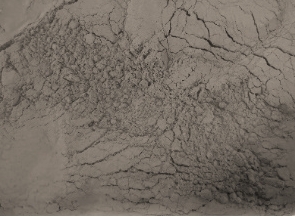
Why Optimise the Silver Powder Cleaning and Baking Process?
Silver powder is widely used in the electronics and electrical industries. Its ultra-fine particles require precise control of particle size distribution and morphology during manufacturing. The traditional process has the following problems:
1. Incomplete cleaning: Residual impurities may affect the electrical properties of silver powder.
2. Uneven baking: The high-temperature baking process can easily cause particle agglomeration or an increase in particle size. This negatively impacts the final product quality.
By optimizing the cleaning reagent and baking temperature, these shortcomings can be overcome and high-quality ultrafine silver powder can be prepared.
Research Methodology and Optimisation Plan
Silver powder preparation process
- Raw materials and instruments: Start with a high-purity
silver ingot to prepare a silver nitrate solution. Then, use the hydrated hydrazine reduction method to convert it into silver powder.
Cleaning reagents: To reduce the impurity residue, use deionized water, anhydrous ethanol oleic acid, and other reagents several times.
- Baking conditions: Use an ordinary and vacuum oven to bake the silver powder at different temperatures.
Experimental design
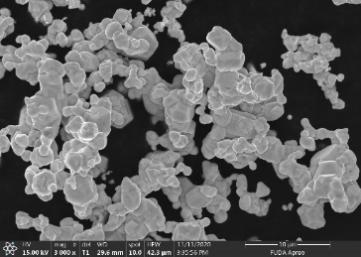
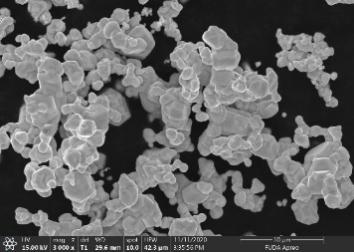
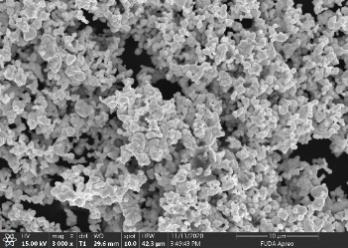
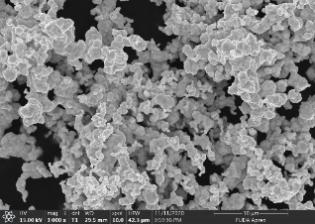
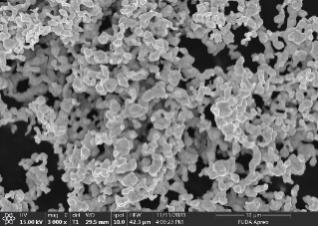
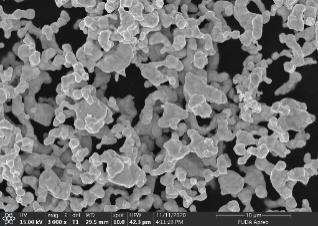
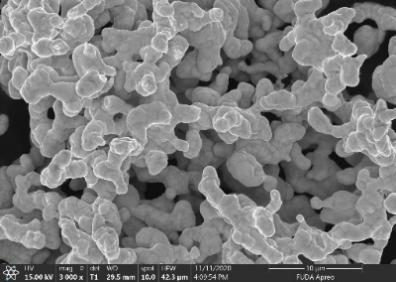
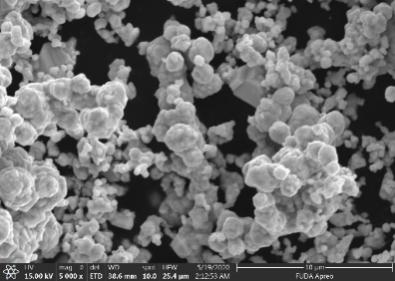
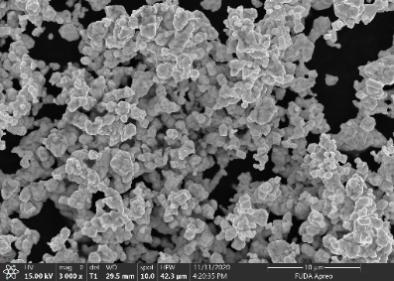
The study used nine different cleaning and baking combinations (see Table 1). This was done to see how cleaning agents and baking temperatures affect silver powders.
Table 1 Different Cleaning and Baking Plans
|
Conditions
Plan |
Cleaning Reagents |
Oven Types |
Baking Temperatures℃ |
| 1 |
Deionized Water |
Normal |
150 |
| 2 |
Deionized Water |
Vacuum |
150 |
| 3 |
Anhydrous Ethanol |
Vacuum |
50 |
| 4 |
Anhydrous Ethanol |
Vacuum |
100 |
| 5 |
Anhydrous Ethanol |
Vacuum |
150 |
| 6 |
Anhydrous Ethanol |
Vacuum |
200 |
| 7 |
Anhydrous Ethanol |
Vacuum |
250 |
| 8 |
Deionized Water |
Vacuum |
100 |
| 9 |
Anhydrous Ethanol+Oleic Acid |
Vacuum |
100 |
|
|
|
| Plan 1 |
Plan 2 |
Plan 3 |
|
|
|
| Plan 4 |
Plan 5 |
Plan 6 |
|
|
|
| Plan 7 |
Plan 8 |
Plan 9 |
Key Findings and Analyses
The effect of baking temperature on the particle size of silver powder
- As the drying temperature increases, the silver powder particles gradually become larger. The high temperature increases the activity of the atoms on the particle surface. This promotes diffusion and leads to agglomeration between the particles.
- It is recommended to keep the baking temperature below 100°C. This will help maintain the stability of the particle morphology.
Selection of cleaning reagents
- Silver powders cleaned with anhydrous ethanol have a smaller particle size compared to those cleaned with deionized water. This is observed after baking. This is due to the fact that the low surface tension of anhydrous ethanol reduces the capillary forces between particles, thus reducing the risk of agglomeration.
- The cleaning reagent, mixed with added oleic acid, forms a protective layer on the silver powder's surface. This layer significantly reduces electrostatic agglomeration during sieving. It also makes it easier to mix the silver powder with other metal powders in subsequent processing.
Bulk density and particle size analysis
- Under the same cleaning reagent, silver powder baked at low temperatures has a smaller density and particle size. In contrast, high-temperature baking results in an increase in both density and particle size.
- In summary, using a vacuum oven combined with anhydrous ethanol and an oleic acid solution produces high-quality silver powder. This method ensures a uniform particle size distribution and a moderate bulk density.
Values of Bulk Density and Average Particle Size of Silver Powders Prepared by Different Washing and Baking Processes
Conditions
Plan |
Bulk Density g/cm3 |
Average Particle Size
μm |
| 1 |
0.91 |
3.48 |
| 2 |
0.89 |
3.38 |
| 3 |
0.75 |
2.13 |
| 4 |
0.75 |
2.22 |
| 5 |
0.78 |
2.95 |
| 6 |
0.84 |
3.35 |
| 7 |
0.91 |
3.97 |
| 8 |
0.82 |
2.75 |
| 9 |
0.72 |
2.22 |
Practical Applications and Future Prospects
The optimized silver powder preparation process can significantly improve the performance of silver-based electrical contacts:
1. More homogeneous metallographic organization: Avoid particle agglomeration, and ensure electrical conductivity and stability.
2. Higher processing efficiency: Reduce the problem of electrostatic aggregation, and improve the fluidity and mixing of the powder.
3. Wider range of applications: This method allows for a wider range of applications. It is suitable for producing high-precision electronic devices and electrical contact materials.
Future research can focus on creating cleaner and more efficient cleaning agents. It can also look at automating the baking process. This will help improve the scale and stability of silver powder production.
Improving the cleaning and baking process of silver powder is a big step in materials science. It also helps in using high-performance electrical contact materials in industry. If you have any questions about the process of silver powder preparation, please feel free to contact us.