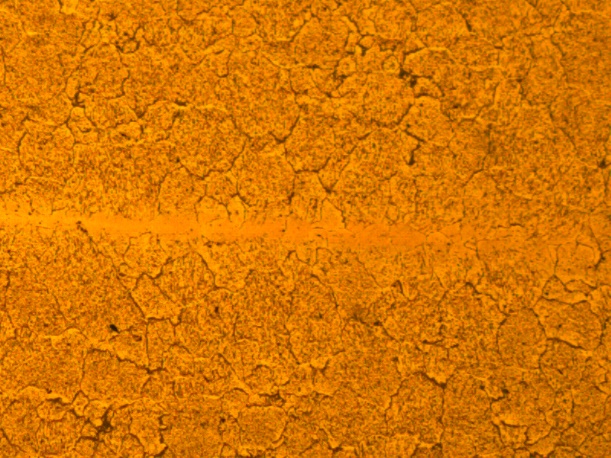
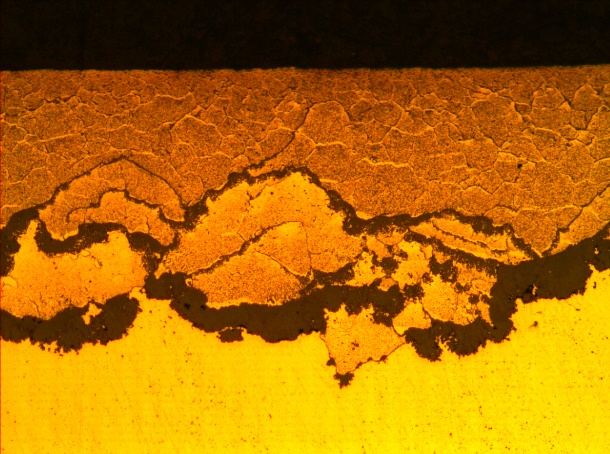
Growing environmental regulations and rising silver prices have increased pressure on the industry. As a result, research now focuses on developing silver-saving, high-performance AgCdO contact materials.
Fudar Alloy researchers have studied the application and performance of a high oxide content AgCdO contact material in GMC-50 AC contactors.
Why Choose AgCdO Materials with High Oxide Content?
AgCdO contact material has the following advantages:
1. Strong anti-melting welding: Effectively prevents contacts from bonding and prolongs equipment service life.
2. Stable electrical properties: Low contact resistance ensures efficient current transmission.
3. Resistance to arc erosion: The contact surface maintains good integrity even in high current environments.
To reduce silver content while improving electrical properties, researchers added trace amounts of tin (Sn) to conventional AgCdO. They also optimized the contact's structure using an internal oxidation process.
Development of AgCdO Materials with High Oxide Content
1. The role of adding Sn element
SnO₂ particles have excellent thermal stability. They help prevent CdO (cadmium oxide) from aggregating at grain boundaries, which could otherwise degrade performance. Sn and CdO form a complementary role to further enhance the material's resistance to burnout and fusion welding. The final formulation chosen for this test is shown in Table 1.
Table 1:
| No. |
Ag |
CdO |
SnO2+T |
| 1# |
Balance |
15 |
1.5 |
| 2# |
Balance |
17 |
2 |
| 3# |
Balance |
17 |
2.5 |
2. Performance Comparison of the Same Material Under Different Internal Oxidation Processes
To determine the best internal oxidation process, 1# material undergoes oxidation under different conditions. The physical properties of the contacts are then compared to identify the optimal process.
Table 2:
| No. |
Temperature (℃) |
Oxygen Pressure (MPa) |
Time (h) |
| Technology A |
700 |
0.5 |
— |
| TechnologyB |
700 |
0.8 |
— |
| technology |
750 |
0.8 |
— |
The 1# test material was internally oxidized under the above conditions for some time until the sample was oxidized. The physical properties and metallographic organization of the contacts were compared after oxidation.
Metallographic Structure
Figure 1、Formulation 1#、TechnologyA、200X
Figure 2、Formulation 1#、TechnologyB、200X
Figure 3、Formulation 1#、TechnologyC、200X
The contact grain boundaries in Fig. 1 are clearly visible, indicating that some oxides have precipitated at the grain boundaries during the oxidation process.
In Fig. 2, the grain boundaries are finer, with fewer oxides precipitated. The diffusion rate of Cd increases under higher oxygen pressures, and the oxide particles are evenly distributed within the grain boundaries.
In Fig. 3, the grain boundaries are less visible, and the oxide particles within the contact grain boundaries have precipitated more coarsely. This suggests that higher temperature and pressure accelerate Cd diffusion, leading to larger oxide particle formation.
3. Optimisation of Internal Oxidation Technologies
The study compares three internal oxidation processes—A, B, and C—for treating AgCdO materials. These processes are evaluated at different temperatures and oxygen pressures. The study ultimately finds that:
Hardness
|
Hardness(HV0.3) |
| Technology A |
101 |
| Technology B |
98 |
| Technology C |
97 |
The hardness of test material #1 did not differ much between the three oxidation processes.
Electrical Resistivity
|
Electrical Resistivity(μΩ·cm) |
| Technology A |
3.12 |
| Technology B |
2.91 |
| Technology C |
2.76 |
The lowest electrical resistivity is observed under internal oxidation technology C. This is because the grain boundaries of the contacts are least pronounced in this process. In contrast, technology A results in the highest distribution of grain oxides.
Under technology C, at 750 °C and an oxygen pressure of 0.8 MPa, the oxide particles are uniformly distributed. As a result, the contact hardness and resistivity show the best performance. The technology was able to significantly reduce the arc erosion of the contacts while maintaining stable electrical properties.
4. Comparison of the Performance of Different Materials Under the Same Internal Oxidation Technology
Technology C was chosen for the internal oxidation process. Three test material samples were placed in the same furnace for internal oxidation. The performance of different material formulations under these conditions was then compared.
Metallographic Structure
Figure 4、Formulation 1#、TechnologyC、200X
Figure 5、Formulation 2#、TechnologyC、200X
Figure 6、Formulation 3#、TechnologyC、100X
Under the same oxidation technology C, the metallographic structure after oxidation varies significantly across different formulations.
In Fig. 4 and Fig. 5, the needle-like precipitation of oxide particles is more noticeable. The orderly arrangement of these needle-shaped oxides acts as fiber reinforcement, improving the material's burnout resistance.
However, in Fig. 6, the oxidation of formulation 3# shows severe oxide aggregation, which prevents further oxidation. The metallographic structure reveals that the oxide aggregation is concentrated around the grain boundaries.
During the casting process, Sn preferentially precipitates with Cd at the grain boundaries. When the Sn content is higher, some Sn precipitates near the grain boundaries. In the internal oxidation process, oxygen diffusion into the grain boundary slows down. This leads to the formation of oxides as oxygen reacts with Cd and Sn at the boundaries. As oxidation progresses, the aggregation of oxides becomes more severe, making it difficult for oxygen atoms to pass through.
To prevent this issue, increasing the oxygen pressure could smoothen the oxidation process. However, due to limitations in domestic equipment, higher pressure oxidation tests could not be conducted.
Hardness
|
Hardness(HV0.3) |
| Formulation 1# |
104 |
| Formulation 2# |
97.4 |
Since formulation 3# could not be oxidized successfully, the hardness was tested only for formulations 1# and 2, which were not very different.
Electrical Resistivity
|
ElectricalResistivityy(μΩ·cm) |
| Formulation 1# |
2.76 |
| Formulation 2# |
2.92 |
By comparing the metallographic structure, hardness, and resistivity, and considering the silver content of each formulation, formulation 2# was chosen for the GMC series AC contactor supply samples.
Technology C was selected for the internal oxidation process.
Material Performance Testing and Verification
Performance tests were conducted on the developed high oxide content AgCdO contact material in the GMC-50 AC contactor.
The tests were carried out at temperatures ranging from 5°C to 35°C, with a relative humidity of less than 85%, and at elevations below 2,000 meters.
1. Temperature-rise Test
| Wiring Connector |
Pre-test Temperature |
Post-test Temperature |
Benchmark |
Temperature-rise |
Result |
| R |
30.2 |
72.7 |
<70K |
42.5 |
OK |
| S |
30.3 |
74.4 |
44.1 |
OK |
| T |
30.3 |
80.1 |
49.8 |
OK |
| U |
30.2 |
72.4 |
42.1 |
OK |
| V |
30.3 |
82.6 |
52.3 |
OK |
| W |
30.1 |
77.0 |
46.9 |
OK |
As can be seen from the table above, the samples were operated at rated current and the measured temperature rises were all below 70K, meeting the design requirements.
2. Electrical Life Test
Actual Test Circuit Conditions
| Test Voltage(V) |
Test Current(A) |
Power Factor |
On-time(ms) |
Off time(ms) |
| 450 |
192 |
0.35 |
100 |
9000 |
Under AC-4 test conditions (voltage 450V, current 192A), the samples achieved an electrical life of over 56,000 cycles.
3. Connection and Breaking Tests
Connection Test
Actual Test Circuit Conditions
| Test Voltage(V) |
Test Current(A) |
Power Factor |
On-time(ms) |
Off time(ms) |
| 450 |
384 |
0.45 |
100 |
9000 |
Connecting and Breaking Test
Actual Test Circuit Conditions
| Test Voltage(V) |
Test Current(A) |
Power Factor |
On-time(ms) |
Off time(ms) |
| 450 |
320 |
0.45 |
100 |
9000 |
After 50 cycles of high-intensity On and Off test, the contact surface does not show obvious burns or abnormalities, and the performance is stable.
4. Endurance Testing
Actual Test Circuit Conditions
| Test Voltage(V) |
Test Current(A) |
Power Factor |
On-time(ms) |
Off time(ms) |
| 450 |
192 |
0.45 |
100 |
9000 |
The insulation resistance and voltage endurance properties of the samples meet the requirements after 6,000 consecutive operations under the agreed operating conditions.
Applications & Benefits
1. Remarkable Silver Saving Effect
By adding Sn elements and optimizing the oxidation process, the new AgCdO contacts reduce the amount of silver. Despite this reduction, they still meet or even exceed the electrical properties of traditional AgCdO12 and AgCdO15 materials.
2. High Adaptability
The material operates stably in GMC-50 AC contactors. It is also suitable for other low-voltage electrical equipment with high-performance requirements.
3. Balance Between Environmental Protection and the Economy
There is some controversy over the environmental impact of CdO materials. However, optimizations like adding Sn have reduced the volatility of the contact materials. This not only mitigates the environmental impact but also lowers production costs.
Conclusion
The AgCdO contact material can solve issues with traditional materials. This is done by adding Sn elements and improving the oxidation process. This not only saves silver but also greatly enhances electrical performance. As the core contact material of the MC-50 AC contactor, it shows excellent stability and durability, which provides an important direction for the upgrade of electrical contact technology.
In the future, the development of more environmentally friendly materials and advancements in process technology will drive innovation in contact materials. These materials will play a key role in a wider range of electrical equipment. If you have any questions about AgCdO contact material, please feel free to contact us.