To further improve conductivity, resistance to melt welding, and wear resistance of contact materials, researchers at Fudar Alloys have introduced a new solution. They developed an innovative AgWNi contact material designed to meet these enhanced performance requirements. By introducing the nickel (Ni) element, this material shows significant improvement in physical and electrical properties, providing a brand new solution for upgrading the performance of circuit breakers.
Why Choose AgWNi Material?
Traditional AgW contact materials are widely used for their high-temperature resistance, low coefficient of expansion, and high electrical conductivity. However, AgW materials also have the following problems:
- Unstable contact resistance: Arc action causes tungsten (W) on the contact surface to oxidize. This oxidation leads to the formation of a non-conductive tungstate film.
- High sintering difficulty: Silver (Ag) and tungsten (W) are not miscible. During liquid-phase sintering, their poor wettability makes it challenging to achieve a dense sintered body.
Adding Ni elements to the AgW material improves the wettability of Ag and W. This change enhances the densification and performance of the contact material.
Preparation Process of AgWNi Contacts
The powder metallurgy infiltration process was used to prepare AgWNi contact materials, and the process included the following steps:
1. Preparation of raw materials
- Ag powder (purity ≥99.9%, particle size-200 mesh)
- W powder (particle size 2μm)
- Ni powder (purity ≥99.9%, particle size-300 mesh)
2. Powder mixing
- WNi pre-alloyed powder was prepared by ball milling by mixing W powder and Ni powder in a 99.1:0.9 ratio.
- Mix WNi powder and silver powder in a ratio of 65:35 to make skeleton powder.
3. Forming and infiltration
- Pre-fire, form and infiltrate the skeleton powder under the protection of hydrogen atmosphere to obtain the finished AgWNi contact.
Effect of Ni Element and Experimental Results
Through microstructure analysis, mechanical property testing, and electrical property evaluation, we found that adding Ni improved the overall performance of AgW contacts.
1. Improvement of wettability and densification
The introduction of Ni reduces the interfacial tension between silver (Ag) and tungsten (W). This improvement in wettability allows liquid Ag to better penetrate and fill the pores between solid W particles.
Compared with the traditional AgW55 material, the relative density of AgWNi contact is improved from 97.62% to 98.85%.
2. Improved hardness and electrical conductivity
The hardness of AgWNi contacts has increased by 14.48% and resistivity has decreased by 3.9%. The increase in hardness improves the wear resistance of the contact material. At the same time, the decrease in resistivity helps to effectively reduce the temperature rise during operation.
Comparison of Physical Properties of Ag45WNi0.5 and AgW55
| Sample |
Hardness HB |
Relative Density(%) |
Electrical Resistivity(µΩ•cm) |
| AgW55 |
124 |
97.62 |
2.92 |
| Ag45WNi0.5 |
145 |
98.85 |
2.81 |
Microstructure and SEM Analysis
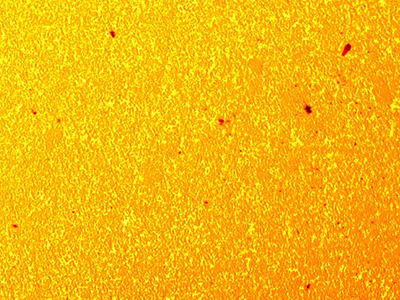
- The microstructure of AgWNi contacts is even, and the porosity is much lower. However, more unfilled closed pores are still found in regular AgW contacts.

|
|
(a) AgW55Ni0.5 (200x)
|
(b) AgW55 (200x)
|
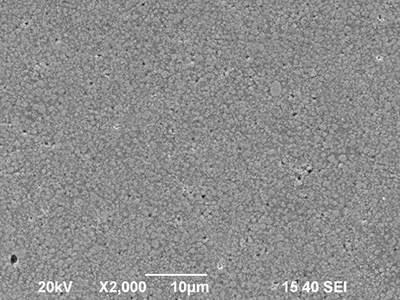
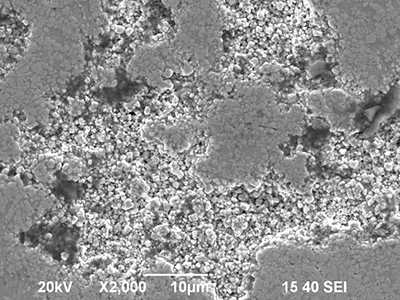
- SEM fracture analysis shows that the AgWNi samples are more tightly sintered bonded and exhibit higher mechanical stability.
|
|
(a) AgW55Ni0. 5 (2000x)
|
(b) AgW55 (2000x)
|
Practical Applications and Future Prospects
The new AgWNi contact material boasts superior physical and electrical properties. It is especially suitable for use in miniature circuit breakers and other electrical equipment that require high reliability and long life. Its application prospects include:
- High-performance circuit breakers: Can be used in industrial and civil scenarios to meet higher current breaking requirements.
- Energy-efficient electrical equipment: Low resistivity can help reduce energy consumption and improve equipment efficiency.
In the future, the research could further optimize the preparation process of AgWNi materials and explore their potential applications in other electrical equipment.
Conclusion
By adding Ni elements to AgW contact materials, AgWNi contact materials have achieved an all-around improvement in terms of densification, hardness,s, and electrical conductivity. This innovation offers new technical help for upgrading contact materials in miniature circuit breakers. It also greatly improves the reliability and stability of electrical equipment. If you have any questions about AgWNi, please feel free to contact us.