For these applications, the
contact material must maintain reliable conductivity, resist wear and corrosion, and support millions of operating cycles. To meet these requirements, Fudar Alloy developed and trial-produced AuNi5/CuNi20 composite
rivet contacts, combining a gold-nickel working layer with a copper-nickel base material.
Why AuNi5 Works for Low-Current Sensor Contacts
Gold is widely used in high-reliability contact applications because of its excellent conductivity and chemical stability. It does not easily form oxide or sulfide films, which helps keep contact resistance low and stable.
Pure gold, however, is not ideal for every contact application. Its hardness and strength are relatively low, and it may deform under mechanical stress. By adding nickel, AuNi5 improves hardness, strength, resistance to contact welding, and corrosion resistance while maintaining relatively low resistivity.
AuNi5 is especially suitable for dry circuit and milliampere-level applications. It also performs well in gasoline environments, making it a strong choice for automotive fuel sensor contacts that require smooth and accurate signal output.
Designing the Composite Structure Around Sensor Requirements
The AuNi5/CuNi20 composite rivet was designed for typical automotive sensor conditions:
- Contact pressure: 0.2–0.35 N
- Voltage: 10–20 V DC
- Current: 150–250 mA
- Sliding life: around 3 million cycles, or up to 5 million cycles under wet sliding wear conditions
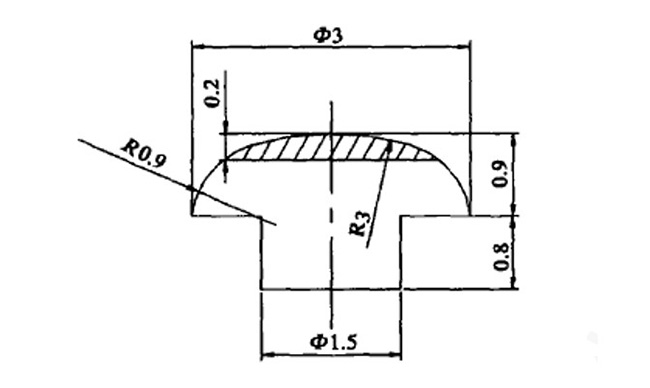
- Cracks after flattening controlled within one-quarter of the rivet diameter
A solid precious-metal rivet can provide strong performance, but it is not always cost-effective for high-volume production. The composite design places AuNi5 only on the working contact surface, where its performance is needed most, while CuNi20 provides mechanical support, corrosion resistance, and reduced precious metal usage.
Dimensional Drawing of AuNi5/CuNi20 Composite Rivet Contacts
This structure helps balance signal reliability, durability, and material cost.
Manufacturing Challenges in Cold-Headed Composite Rivets
In the trial production, AuNi5 wire was prepared through melting, casting, rolling, and cold drawing. CuNi20 wire was prepared through melting, casting, hot extrusion, and cold drawing. The two wires were then formed into composite rivets through a cold-heading process.
During early trials, the main challenges were high deformation resistance, insufficient bonding strength, and edge cracking. These issues were mainly related to the high hardness and yield strength of AuNi5 and CuNi20.
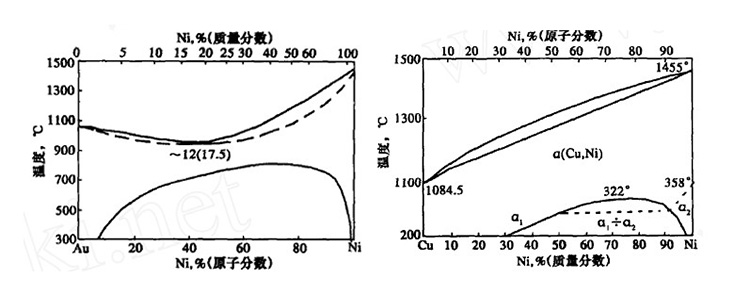
AuNi Phase Diagram CuNi Phase Diagram
To improve forming quality and bonding strength, several process adjustments were made:
- Applying suitable heat treatment to the AuNi5 wire
- Adjusting wire dimensions and cold deformation ratio
- Improving the flatness and cleanliness of wire-cutting surfaces
- Optimizing die geometry and tooling smoothness
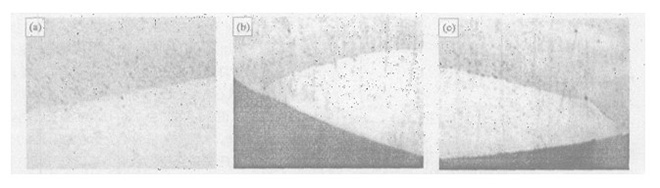
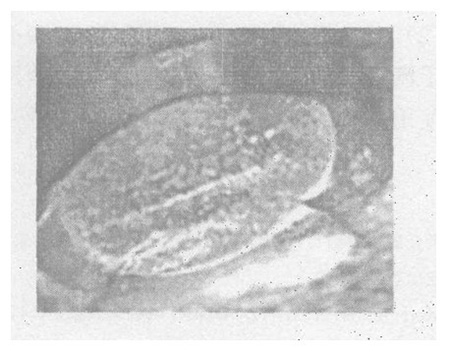
After optimization, cross-section observation showed good bonding at the AuNi5/CuNi20 interface, with no obvious interfacial cracks. In user trials of two pilot batches, no contact layer separation was observed.
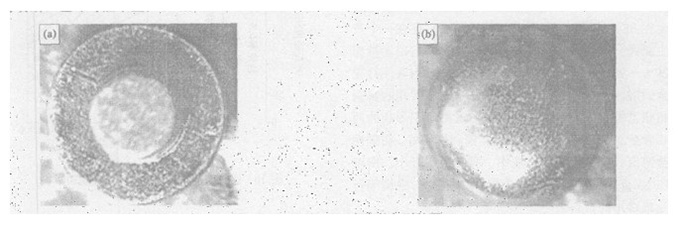
Morphology of AuNi5/CuNi20 Composite Rivet Contacts
Cross-Section of AuNi5/CuNi20 Composite Rivet Contacts
Further Optimization
Flattening tests showed that edge cracking could still occur under severe deformation. This was related to rivet geometry, contact layer thickness, material properties, and uneven deformation during testing.
Morphology of AuNi5/CuNi20 Composite Rivet Contacts After Flattening Test
For further improvement, a contact-welding rivet process can be considered. By using low-voltage, high-current end-face welding before final forming, this method can reduce deformation resistance, improve bonding strength, and help reduce edge cracking compared with direct cold-heading composite forming.
Value for Automotive Sensor Manufacturers
The trial results showed that AuNi5/CuNi20 composite rivet contacts can meet the requirements of automotive fuel sensor applications. Under low-voltage and low-current conditions, the contacts support stable sliding operation, smooth signal output, and long service life.
Compared with solid gold alloy contacts, the composite structure uses precious metal more efficiently while maintaining the required contact performance. For automotive sensor manufacturers, this provides a practical solution that balances reliability, processability, and cost efficiency.
Fudar Alloy provides application-based electrical contact material solutions, supporting customers from material selection and composite structure design to process optimization for automotive, industrial, and low-voltage electrical applications.
If you are developing contact solutions for automotive or EV applications, contact us to discuss your material and process requirements.